Seasonal Living
Tea for Winter
A Chinese tradition of drinking with the seasons, two teas worth brewing on cold days, and the small things that make a cup your own.
Latitia Kung ·
English
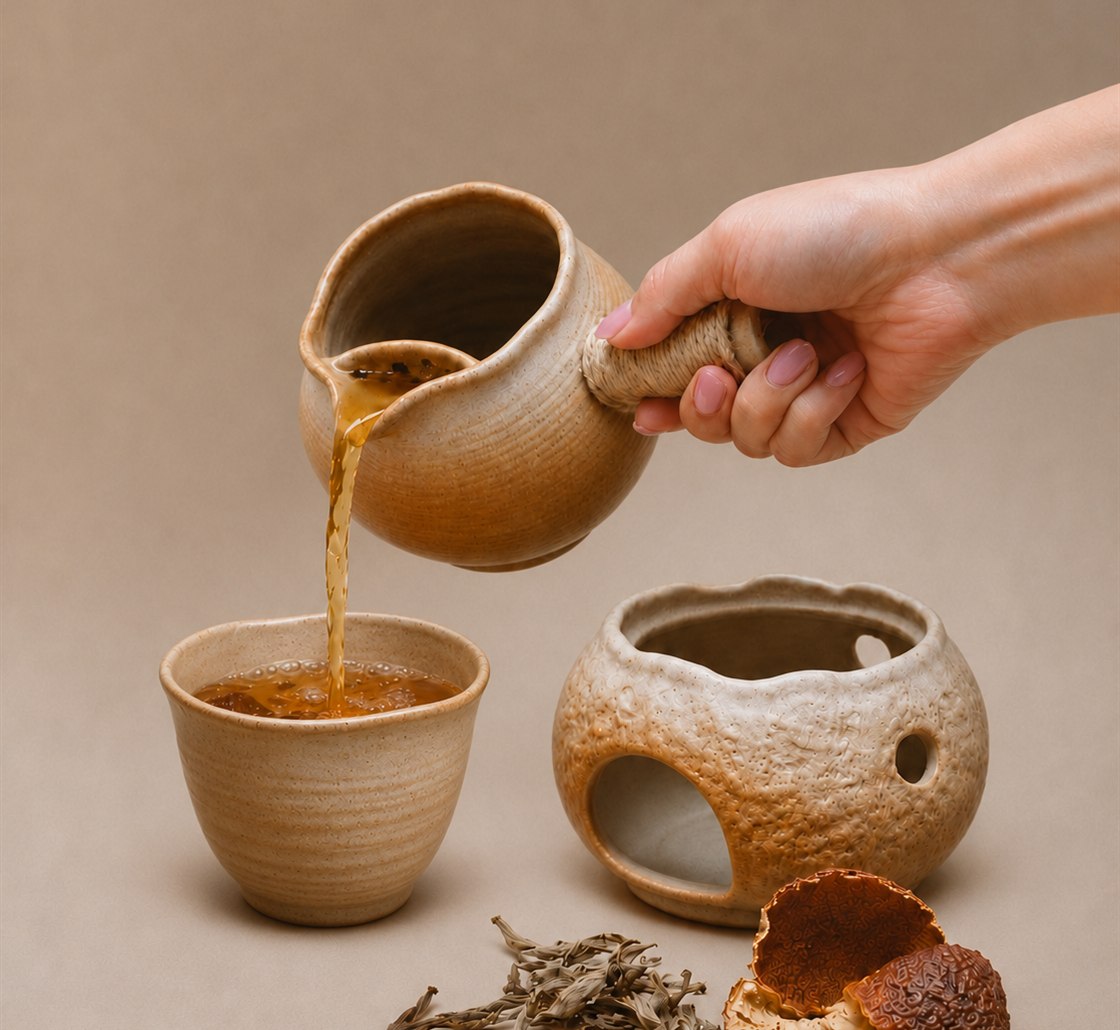
On the first cold afternoon when the light goes before supper, I start reaching for a different tea. The leaves smell a little deeper when the hot water hits them. The cup feels good between both hands. By the time the first sip is cool enough to drink, I’ve usually noticed how quickly I was moving before I sat down.
In Chinese traditions of nourishing life, or yangsheng, everyday habits follow the season. Tea can be part of that care. What you brew may depend on the weather, what you have just eaten, or what smells good when you open the tin. Winter is a lovely time to explore two very different cups: a mellow Chinese black tea and a deeper, earthier ripe pu-erh.
A tea for each season
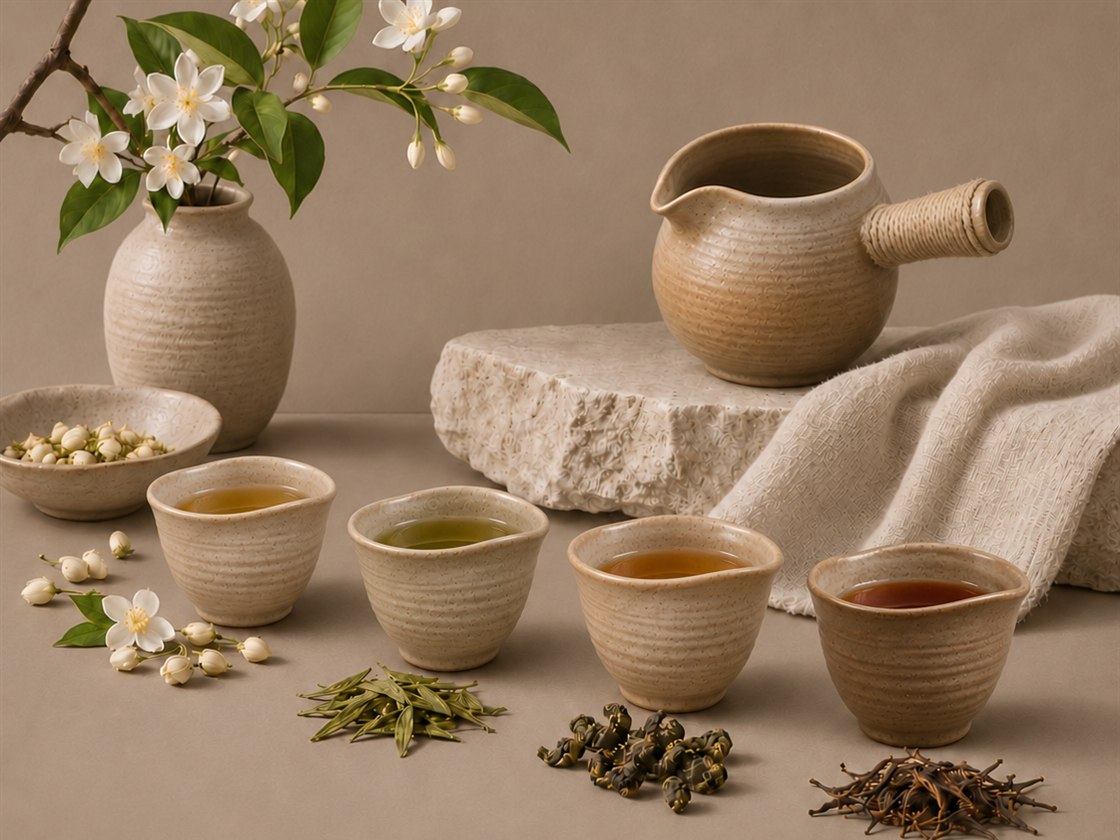
One familiar seasonal guide pairs spring with flower-scented tea, summer with green tea, autumn with oolong, and winter with black tea. Regional tastes and family habits vary. Think of these pairings as a way to notice what you enjoy as the weather changes.
In spring, jasmine-scented tea brings the fragrance of flowers over a light tea base. In summer, a green tea such as Longjing can taste fresh and pleasantly nutty. In autumn, a roasted oolong makes a good companion for a cooler afternoon, with a fragrance that changes as the leaves open. In winter, a fuller black tea is a natural starting point if you like a cup that holds its flavour alongside a snack.
What to brew on a cold day
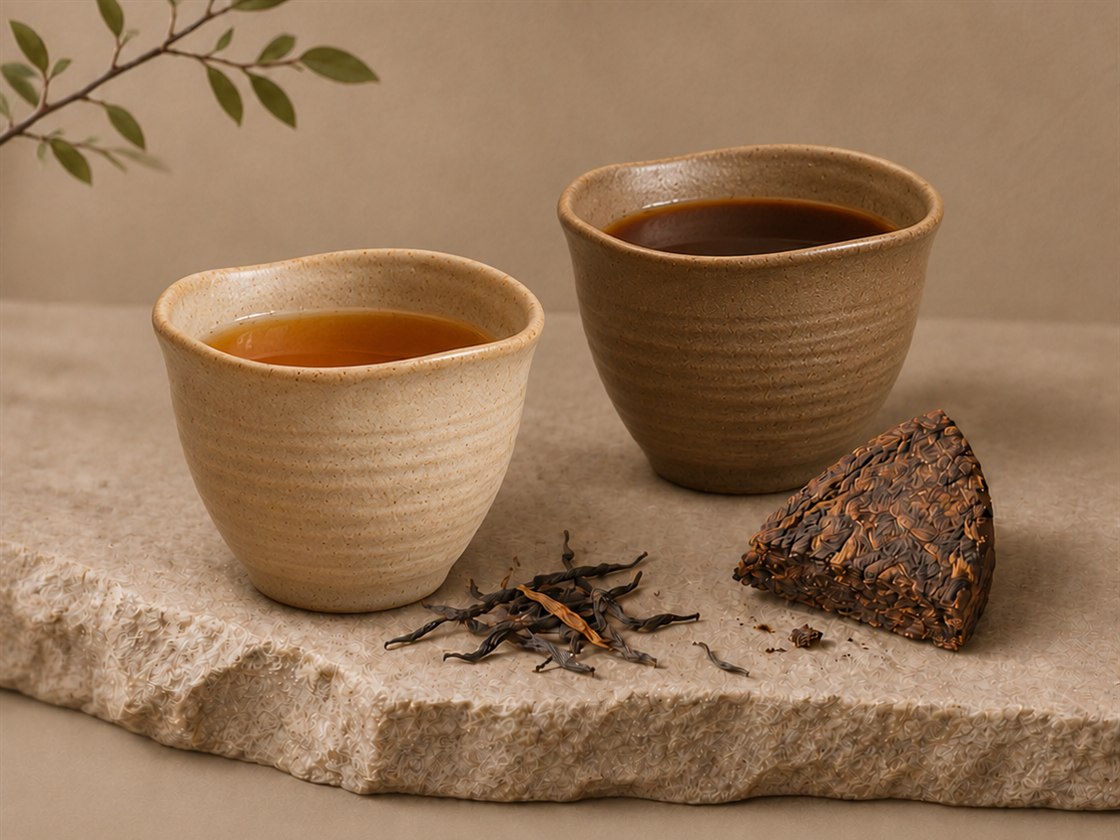
Start with Chinese black tea if you like a cup that smells of malt, honey or dried fruit. A Dian Hong from Yunnan is a good example to try. Sip it plain first. As it cools, the sweetness may become easier to taste. Black tea is often described as warming in traditional seasonal practice. In the cup, you can judge for yourself by the aroma, the warmth of the tea and how it feels to drink it.
Choose ripe pu-erh if you prefer a rounder, earthier cup. The leaves undergo an additional fermentation step during processing, which gives the brew a character of its own. A good cup may remind you of wood or dark grain, with a soft finish. If you are new to it, brew a small pot and taste it next to black tea. Even before you sip, the difference is often apparent in the colour and aroma.
Something small to eat with it
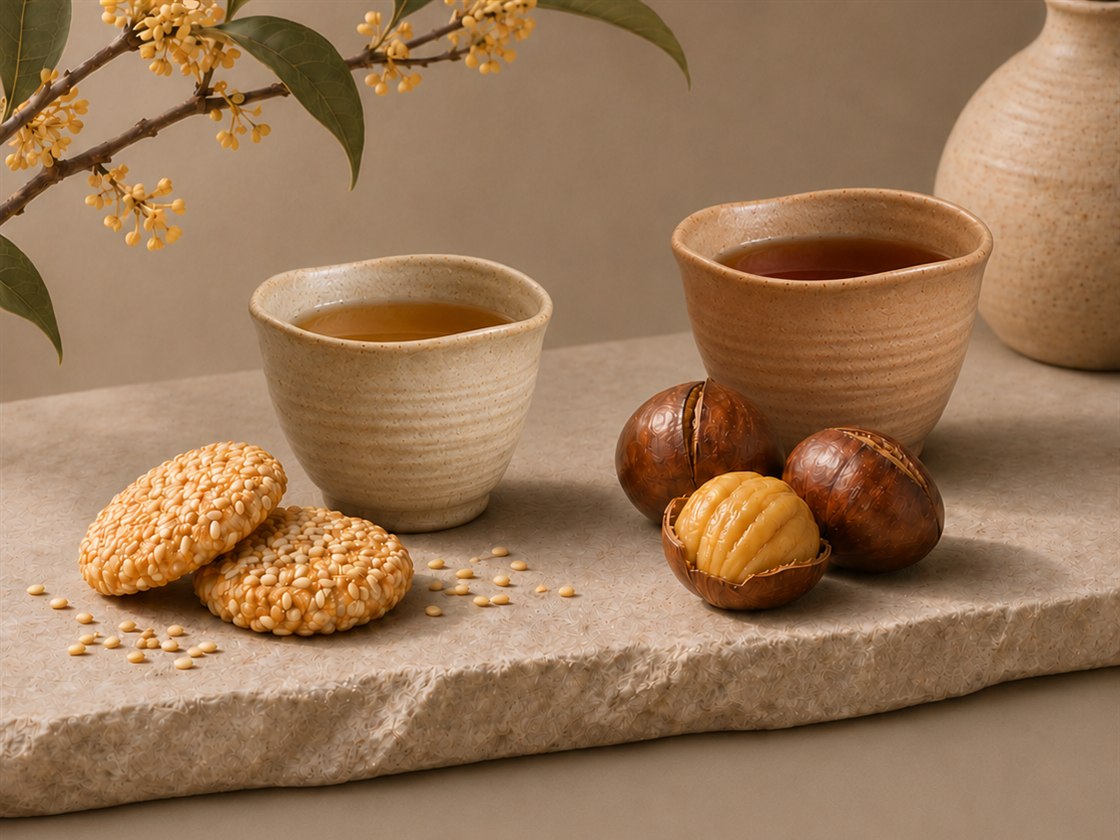
With black tea, try one lightly sweet sesame biscuit. The toasted sesame brings out the malty notes, and the crunch makes the pairing feel complete. Take a sip, try a bite, then taste the tea again. A very sweet biscuit can make a delicate brew seem thin, so I’d start with the least sweet one on the plate.
With ripe pu-erh, try a few warm roasted chestnuts. Their soft texture and gentle sweetness sit comfortably with the tea’s earthy flavour. A plain rice cracker is another option when you want something crisp. Put a little of whatever you choose on a small plate so there’s room to taste both the tea and the food.
Orange peel or ginger
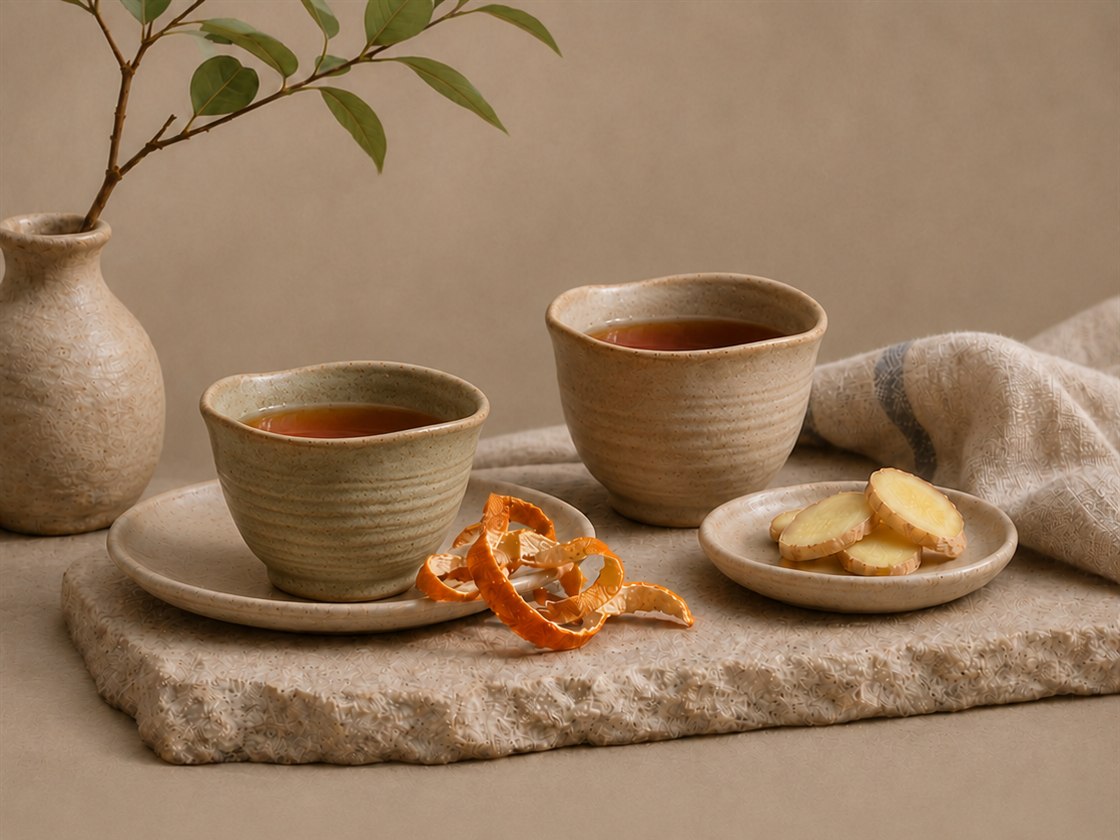
For a brighter black tea, add one small piece of food-grade dried orange peel to the pot. Let it steep with the tea, then strain both out. Taste before adding more. A little peel gives a fragrant lift, and too much can make the cup bitter.
For a spicier ripe pu-erh, add one thin slice of fresh ginger. Start by steeping it with the leaves and remove it when the ginger comes through. Either way, brew the tea plain once first if you can. You will have a better sense of what a small addition does when you know the flavour of the leaves on their own.
Make room for one cup
For a first pot, use the instructions on the tea packet as your starting point. If the cup tastes too strong, shorten the next steep. If it tastes too light, let it sit a little longer. Changing just one thing at a time makes it easier to find the cup you want to drink again.
Then take the tea somewhere you can sit for a few minutes. Notice the scent before the first sip and how it changes by the last. If there is a biscuit or a chestnut left on the plate, save it for that last sip. The next cold afternoon, you’ll know where to begin.
冬日茶事
入冬後,天色在晚飯前便暗下來。第一次遇上這樣冷的午後,我往往會換一款茶。熱水注下去,茶香比平日深一點。雙手捧著杯子,等茶稍涼,喝第一口時,才察覺剛才的腳步有多急。
中國傳統養生講究順時,飲茶也是日常的一部分。天氣、剛吃過的東西,甚至打開茶罐時聞到的香氣,都可以是選茶的理由。冬天不妨比較兩種性格不同的茶,一杯柔和的紅茶,一杯醇厚、帶陳香的熟普洱。
四季,各有一杯茶
傳統有一種四季飲茶的說法,春飲花茶,夏飲綠茶,秋飲烏龍,冬飲紅茶。各地和各家的習慣並不相同,不妨隨著天氣轉變,留意自己想喝甚麼。
春天可以泡一杯茉莉花茶,聞清淡茶香裡的花香。夏天試試龍井,滋味鮮爽,有時還帶點堅果香。入秋後,可以泡一壺焙火烏龍,等茶葉舒展,慢慢感受香氣的變化。到了冬天,如果想找一杯配點心也喝得到茶味的茶,滋味較飽滿的紅茶很適合先試。
天冷時泡甚麼茶?
如果喜歡麥芽、蜜糖或果乾般的香氣,可以從中國紅茶入手,例如雲南的滇紅。先喝一口原味,待茶稍涼,回甘或許會更清楚。傳統飲茶觀念常把紅茶形容為偏溫。喝的時候,可以從茶香、溫度和入口的感受慢慢體會。
如果喜歡醇厚、帶木質或穀物香氣的茶,可以試試熟普洱。製作時多了一道發酵工序,茶湯的風味也不同。初次品嚐,可以各泡一小壺熟普洱和紅茶。還未入口,往往已經能從茶湯的顏色和香氣察覺差異。
一杯茶,配一點甚麼?
紅茶可以配一塊微甜的芝麻餅。烘烤過的芝麻與紅茶的麥芽香很合拍,入口也多一點酥脆。先喝一口茶,咬一口餅,再喝一口,看看茶味有沒有變化。若茶味比較細緻,可以先選甜度低的餅。
熟普洱可以配幾顆暖暖的烤栗子。栗子軟糯,帶淡淡甜味,與茶的陳香相襯。想吃脆一點,也可以試試原味米餅。用小碟盛一點就好,留些餘地,細嚐茶和點心各自的味道。
加一片橙皮,或一片鮮薑
想讓紅茶帶點清香,可以在壺裡放一小片食用乾橙皮,與茶葉同泡,泡好後一起濾去。先嚐一口再決定要不要多加。少量橙皮可以提香,放得太多,茶湯容易帶苦。
想給熟普洱添點辛香,可以放一薄片鮮薑,跟茶葉一起沖泡,待薑味出來便取走。有時間的話,先泡一次原味的茶,熟悉茶葉本身的滋味,再試試加一點橙皮或薑,會更容易喝出差別。
留幾分鐘,好好喝一杯
第一壺可以先照茶包裝上的沖泡指示。覺得太濃,下次泡短一點。覺得太淡,就多等一會。每次只調整一樣,慢慢找出自己想再泡一次的味道。
然後,捧著茶找個地方坐幾分鐘。聞聞第一口之前的茶香,再留意最後一口的味道。碟裡如果還剩一口餅或一顆栗子,可以留到那時慢慢吃。下一個冷冷的午後,就知道想從哪一杯開始。
Further reading · A seasonal guide to Chinese tea
Warmest,
Latitia x