Body Intelligence
Fascia, strength and the art of easing off
What fascia does, why a feeling of tightness tells only part of the story, and how strength and supported rest can share a practice.
Latitia Kung ·

English
After a long spell at a desk, getting up can feel like the first move of the morning all over again. The hips hesitate. The shoulders seem to have taken the shape of the chair. By the time you have crossed the room a few times, the feeling may already have changed. That ordinary shift is a useful place to begin thinking about fascia, and about what we mean when we say we feel tight.
A body made of layers
Fascia is a name for connective tissues that surround and link muscles and other structures. These tissues are rich in collagen. They support the structures around them, and some can contribute to the transfer of force between regions. In one small human study, researchers used ultrasound and observed movement in tissue at the back of the thigh when the ankle was moved. It was a specific observation about how nearby regions interact.
The flower above offers a way to picture layers meeting and moving together. Think of picking up a bag from the floor. The effort is shared across your feet, legs, trunk and arm. Each region does something different, and the movement works because the parts cooperate. Fascia is one part of that cooperation.
You can feel that cooperation in a movement as ordinary as rising from a chair. Your feet meet the floor, your body shifts forward and your legs take your weight. Try it once at your usual pace and once more slowly. Notice where you first sense effort and how it moves as you stand.
What stiffness can tell you
A stiff shoulder after a train journey and a sore shoulder after an unfamiliar workout can feel similar. Their circumstances differ. Consider when the feeling appeared, what you were doing and whether an easy change of position helps. Sensation gives you something to pay attention to. The feeling of ease after stretching or massage tells you how you feel in that moment. Assessing an injury or its recovery takes more information.
For day-to-day stiffness, a walk between tasks, a reach in a comfortable direction or a change of position can be a useful experiment. Try one and see what changes. If you are preparing for a more demanding activity, give yourself a little time to warm up. If pain persists, worsens or follows an injury, ask a qualified clinician for advice before trying to work through it.
Strength you can repeat
Strength begins with a demand you can manage and return to. The following movements offer three ways to practise, depending on what feels comfortable today.
Squat
A shallow squat or a controlled rise from a sturdy chair gives you a way to explore how you carry weight through your feet. Use a stable support if it helps your balance.
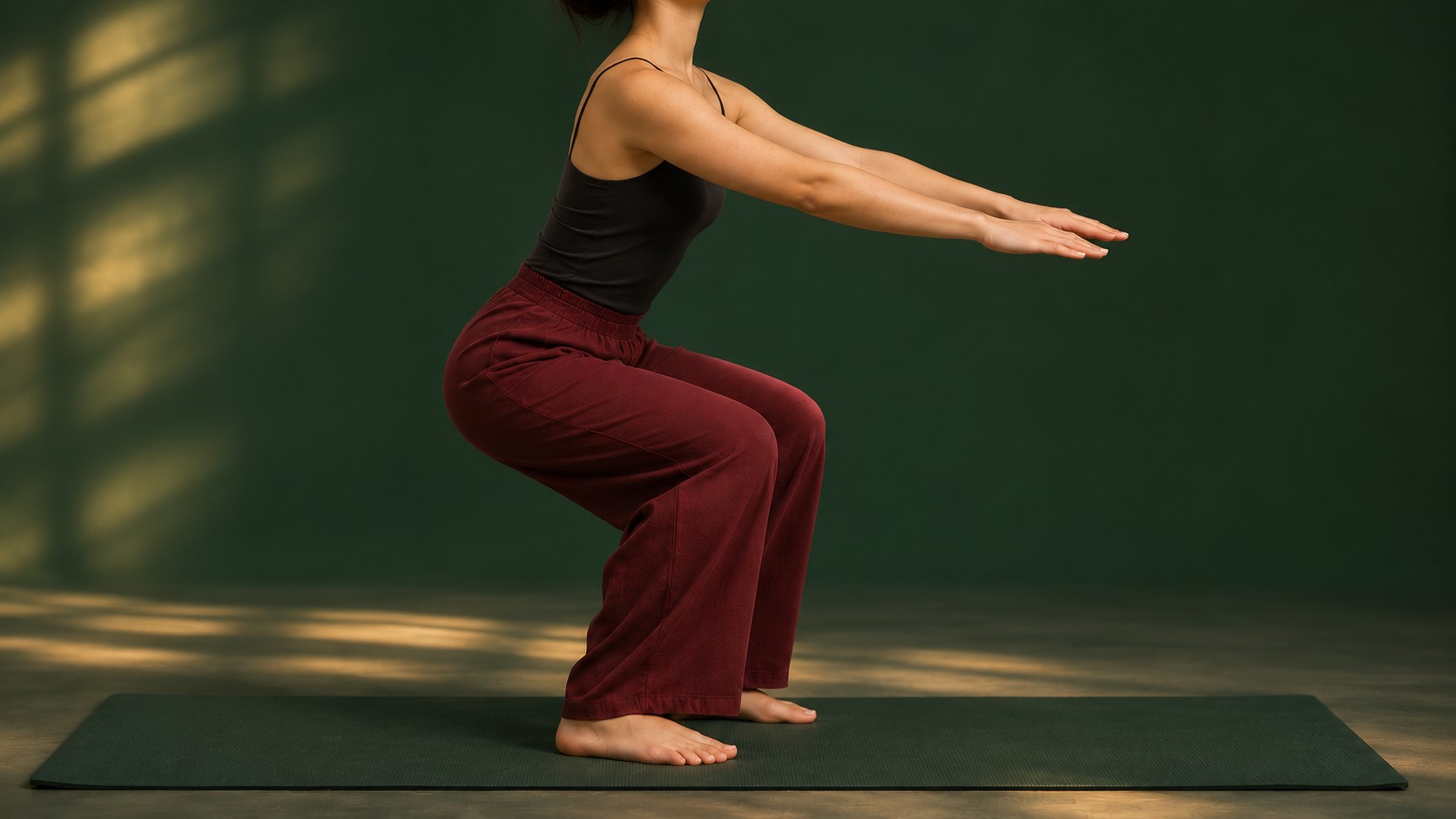
- Stand with your feet comfortably apart. Use a sturdy support if you need it.
- Let your hips move back as your knees bend a little.
- Press through both feet to stand up slowly.
Start with up to five repetitions. Choose a depth you can return from comfortably.
Heel raise
The heel raise shifts your weight towards the front of both feet. The support makes it easier to notice that shift and practise a steady return.
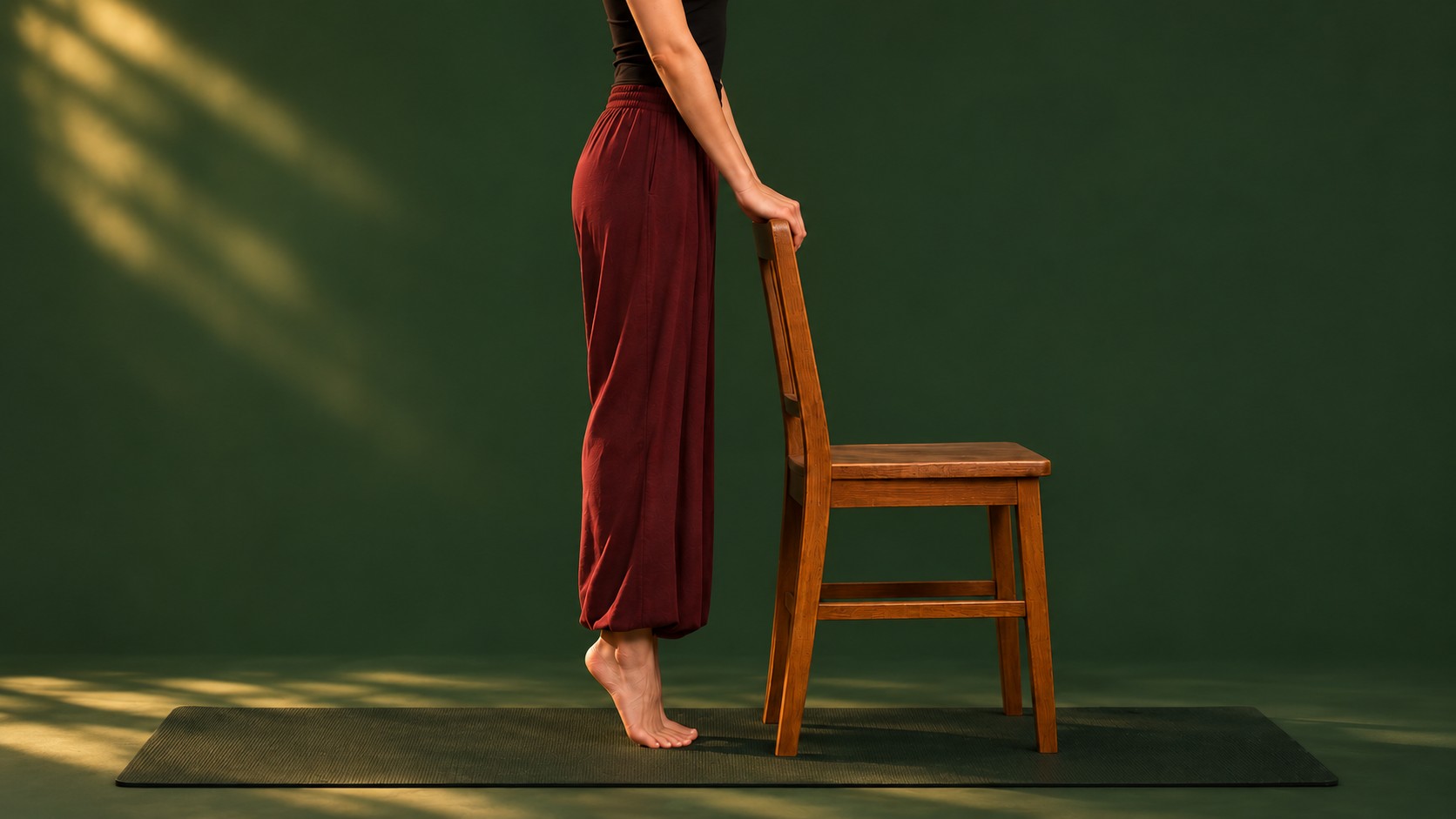
- Hold the back of a stable chair and start with both feet flat.
- Slowly lift both heels, keeping the balls of your feet on the floor.
- Lower the heels with control.
Try up to five repetitions. The chair is there to help you stay steady.
Seated band row
A light resistance-band row gives the upper body a turn. Pay attention to the return as well as the pull.
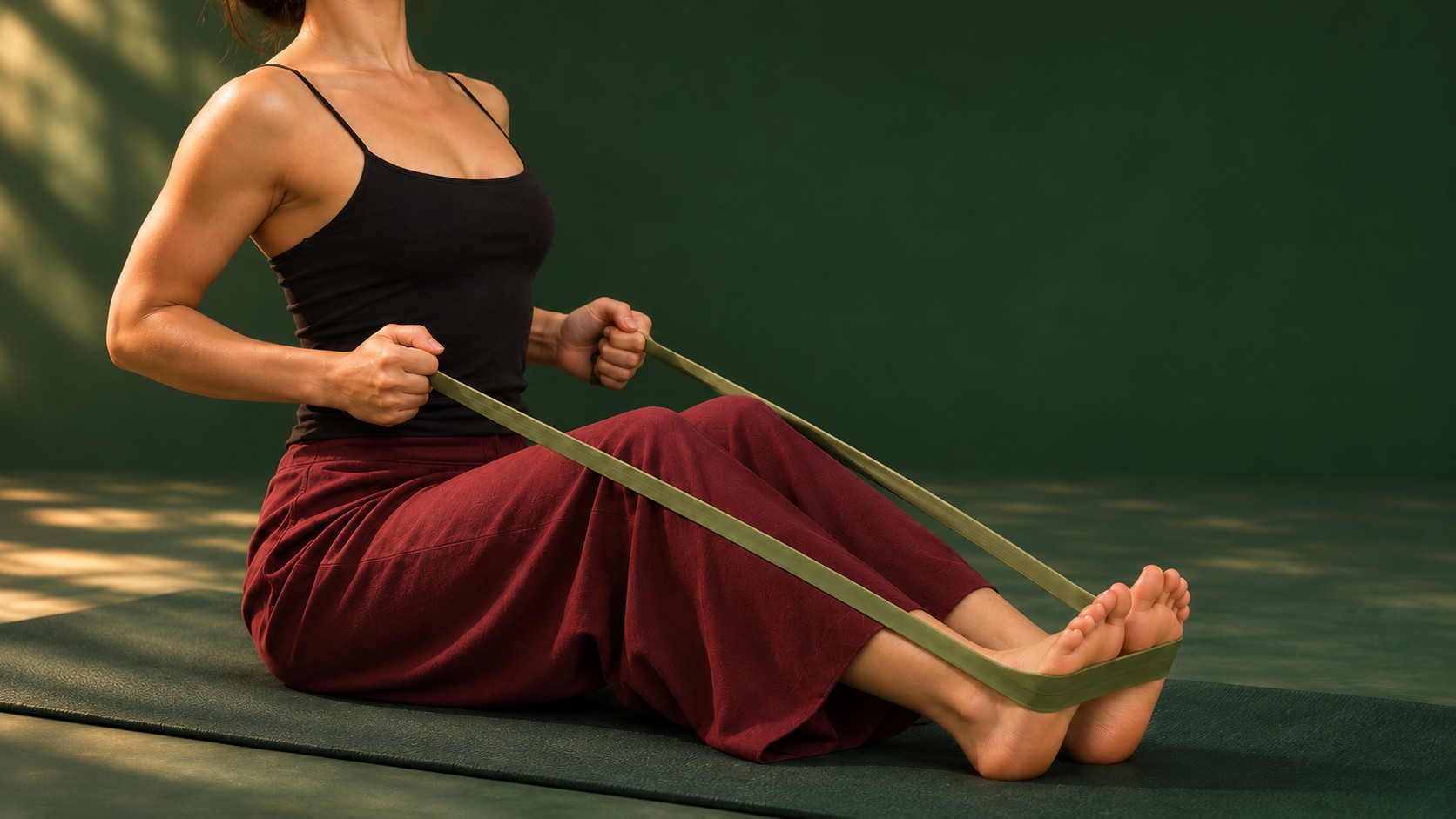
- Check the band and follow its instructions for a secure setup. Choose light resistance.
- Sit tall and pull your elbows back alongside your ribs.
- Let the arms return slowly, keeping control of the band.
Begin with a few easy repetitions. Keep the shoulders relaxed.
Try one movement for a few comfortable repetitions and see how you feel afterwards. Leave time between harder sessions. As a movement becomes familiar, you can decide whether a little more range, resistance or repetition suits you. Changing one thing at a time makes it easier to notice how you respond.
A place to rest
Supported butterfly
Supported butterfly offers a different sort of practice. With a cushion taking some of the weight of each leg, you can settle into a smaller, more comfortable range.
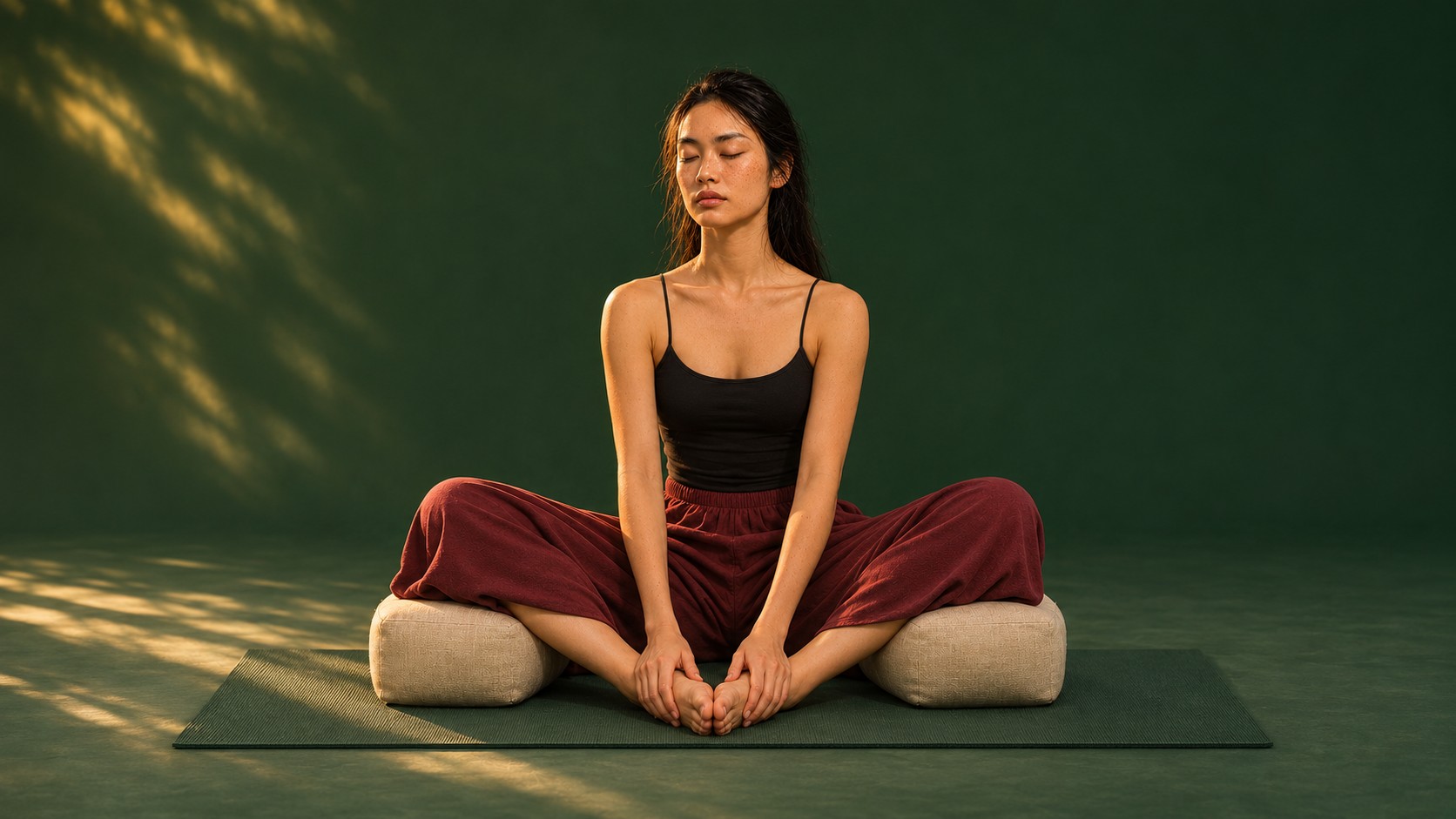
- Sit with the soles of your feet loosely together.
- Slide a cushion under each outer thigh so both legs can rest.
- Stay upright and take a few easy breaths. Bring the knees together slowly to come out.
Try 30 seconds if comfortable. Add height to the cushions if the stretch feels strong.
Supported child’s pose
The bolster gives your chest somewhere to rest. Begin with a brief pause and move out of any position that hurts.
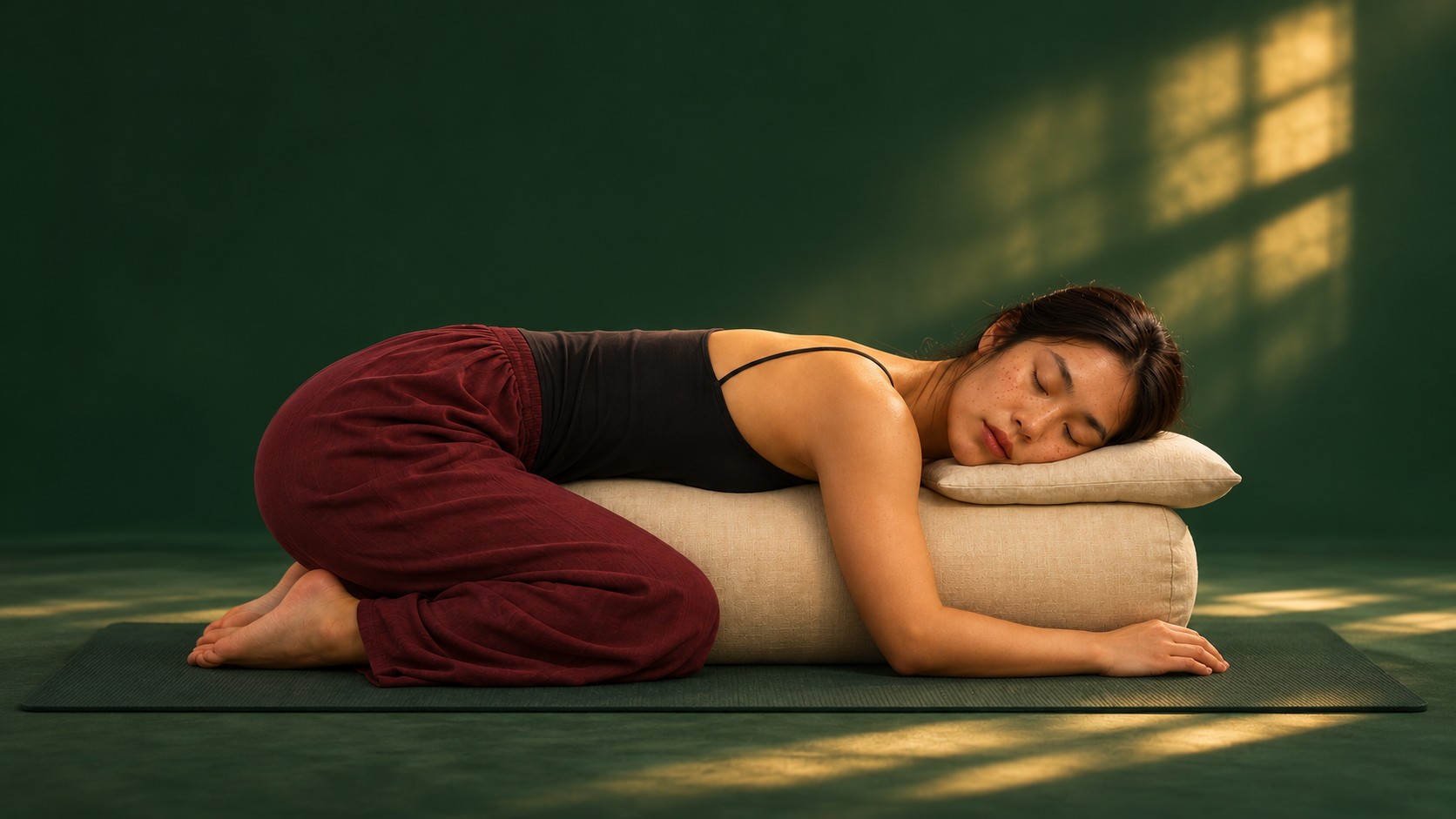
- Place a bolster lengthways in front of you and kneel comfortably.
- Fold forward to rest your chest on the bolster. Turn your head to one side and let your arms settle.
- Take a few easy breaths, then press through your hands to come up slowly.
Try 30 seconds if comfortable. Rest in a chair if kneeling bothers your knees.
There is room for all of this in one week. Some days call for the steadiness of a simple strength exercise. Others offer a walk or a few moments of stillness. Notice what you can do comfortably today, and what you feel ready to return to tomorrow.
繁體中文
在書桌前坐久了,起身的一刻,有時像早上第一次下床。髖部有點僵,肩膀彷彿還留在椅子上。走過房間幾次,感覺或許已經不同。這個平凡的變化,是認識筋膜與緊繃感的起點。
身體的層次
筋膜是一類包覆並連接肌肉及其他結構的結締組織,富含膠原蛋白,能提供支撐,其中部分也參與不同部位之間的力量傳遞。一項小型人體研究以超音波觀察到,移動腳踝時,大腿後側的組織也會移動。這是相鄰部位互相影響的一個具體例子。
花瓣重疊的樣子,可以幫我們想像這些層次。從椅子上站起來時,雙腳踩穩地面,身體略向前傾,再由雙腿承接重量。試試用平常的速度站一次,再慢慢站一次,感受力量從哪裡開始,又如何轉移。
緊繃感告訴我們甚麼
搭完長途火車後肩膀發緊,和做完不熟悉的運動後肩膀痠痛,感覺或許很像,出現的情境卻不同。回想它何時開始、當時正在做甚麼,以及換個姿勢後有沒有變化。伸展或按摩後覺得輕鬆,是當下的感受。評估受傷或恢復情況,需要更多資訊。
久坐時,可以在兩件事之間起身走一走,或在舒適範圍內伸展,看看感覺有何不同。較費力的活動前,留一點時間暖身。若疼痛持續、加劇,或在受傷後出現,請先向合資格的醫療專業人員尋求建議。
練習可以反覆做的力量
淺蹲
可以先做幅度較小的淺蹲,感受雙腳怎樣承接重量。
- 雙腳以舒適的距離站立,需要時扶著穩固的支撐物。
- 臀部向後移,膝蓋微彎。
- 雙腳踩穩地面,慢慢站直。
先做最多五次,選擇能舒服地站回來的深度。
扶椅提踵
提踵時,留意重量如何移到前腳掌。
- 扶著穩固的椅背,雙腳平放。
- 慢慢抬起雙腳腳跟,前腳掌留在地上。
- 控制速度,把腳跟放回地面。
先試最多五次,讓椅子幫你站穩。
坐姿彈力帶划船
讓上半身也動一動。回程和拉動一樣值得留意。
- 檢查彈力帶,依照使用說明安全固定,選擇輕阻力。
- 坐直,把手肘沿肋骨兩側往後拉。
- 控制彈力帶,慢慢伸回手臂。
先做幾次輕鬆的重複,保持肩膀放鬆。
先選一個動作,做幾次舒服的重複。較費力的練習之間留時間休息。動作熟悉後,再決定要增加幅度、阻力或次數,每次只調整一項,較容易察覺自己的反應。
留一個休息的位置
有支撐的蝴蝶式
讓軟墊承接雙腿的重量,在舒服的幅度內休息。
- 坐下,讓腳掌輕輕相對。
- 在兩側大腿外側下各放一個軟墊,讓雙腿有支撐。
- 坐直,輕鬆呼吸幾次,再慢慢把膝蓋合起來。
舒適的話可停留三十秒。若拉伸感太強,就把軟墊墊高。
有支撐的嬰兒式
讓長枕承托胸口。從短暫的停留開始,任何姿勢引起疼痛都可以退出。
- 把長枕縱向放在身前,以舒適的姿勢跪下。
- 身體向前,胸口靠在枕上,頭轉向一側,放鬆雙臂。
- 輕鬆呼吸幾次,再用雙手撐著慢慢起身。
舒適的話可停留三十秒。若跪姿令膝蓋不適,可改為坐在椅子上休息。
一週之中,力量與休息可以並存。今天也許適合做一個簡單的力量動作,明天也許只想散步。留意今天做起來舒服的事,以及明天還想再做的事。
Further reading · Wilke and colleagues’ study of tissue movement across the knee
Warmest,
Latitia x