Body Intelligence
Everything Is Energy
Jing, Qi and Shen, the yogic subtle body, and Reiki through the experience of care and US research on pain and calm.
Latitia Kung ·
Everything Is Energy
The energy we notice
The first signs can be very ordinary. You wake with a clear head after a good night’s sleep. Your shoulders settle during a walk. A familiar piece of music brings warmth to an otherwise difficult afternoon. When we say that our energy has changed, we may be describing several experiences at once, from alertness and fatigue to the feeling of being more present in our own lives.
Everything Is Energy is an invitation to explore that experience through traditions of breath, movement and attentive care. These traditions developed their own languages for vitality. Reading them with care begins with understanding the meaning of their words and making time to notice what happens when we practise.
Jing, Qi and Shen
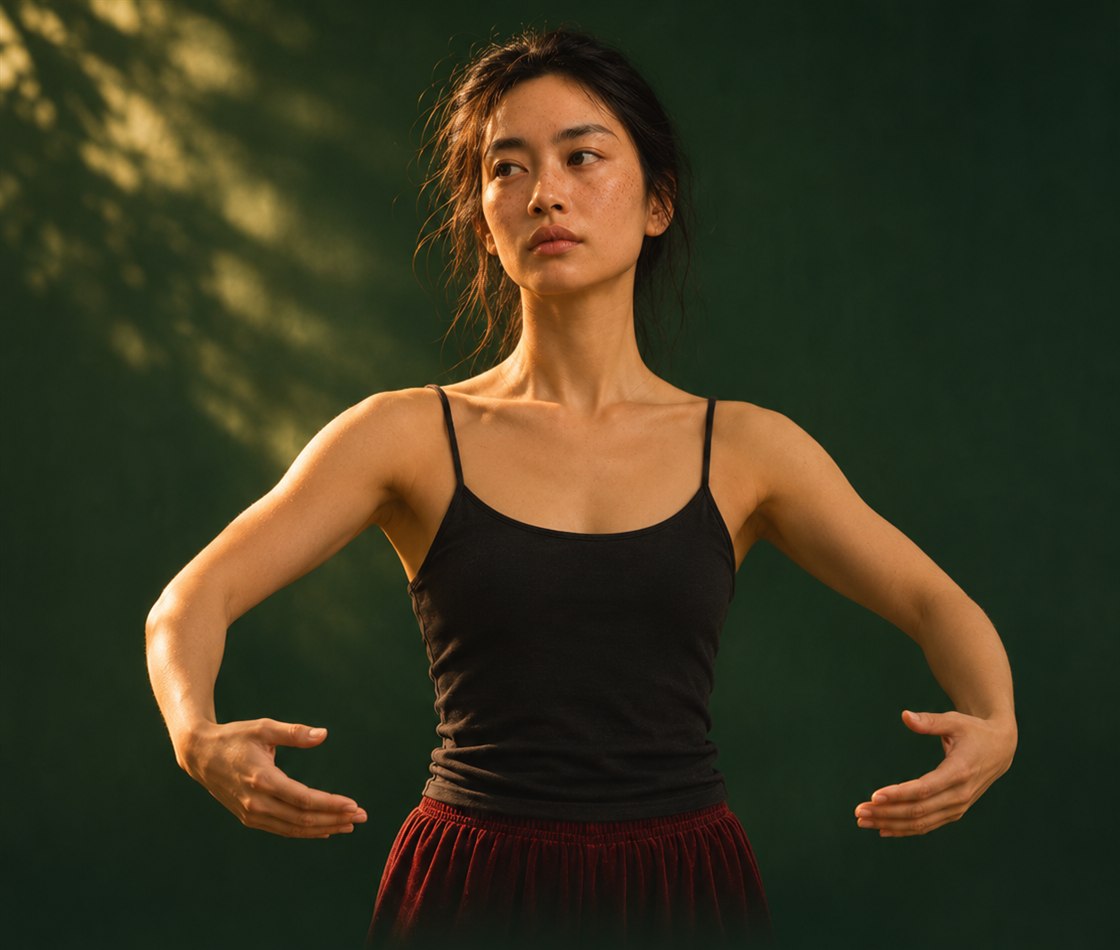
In Daoist cultivation, Jing, Qi and Shen are known as the Three Treasures, often translated as essence, vital breath and spirit. Their meanings develop within particular teachings and practices. Together, they offer a way of thinking about the person as a living relationship between bodily life, breath and awareness.
Qigong gives that relationship a practical form. Posture, movement, breathing and attention come together in a sequence that can be repeated and gradually become familiar. In a quiet class, the work might look simple. An arm rises, a knee softens, and the body settles into a position that can be sustained without strain. Familiarity makes room to notice smaller details, including where a movement feels easy and where it asks too much.
Prana, chakras and the subtle body
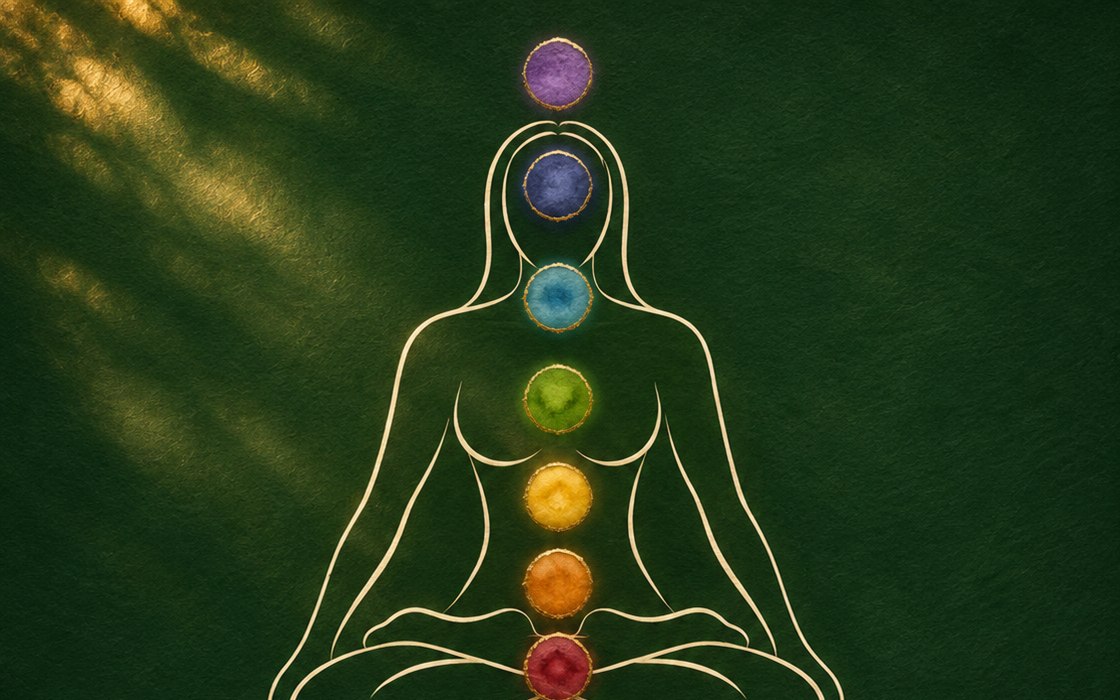
In Indian yoga, prana is often translated as vital breath. Some yogic and tantric traditions describe a subtle body through channels and centres called chakras. Kundalini appears in certain teachings as a coiled spiritual power whose awakening belongs to a wider path of practice. The maps vary across traditions, and the familiar seven-centre image is one way these ideas are presented today.
For a reader beginning this exploration, it helps to meet the image as a spiritual teaching with its own history. A coloured point on an illustration may become a focus for attention or reflection. Learning the context of a practice allows its imagery to become more meaningful, while leaving space for the experience of breath and posture to unfold at an unhurried pace.
Reiki and the experience of receiving care
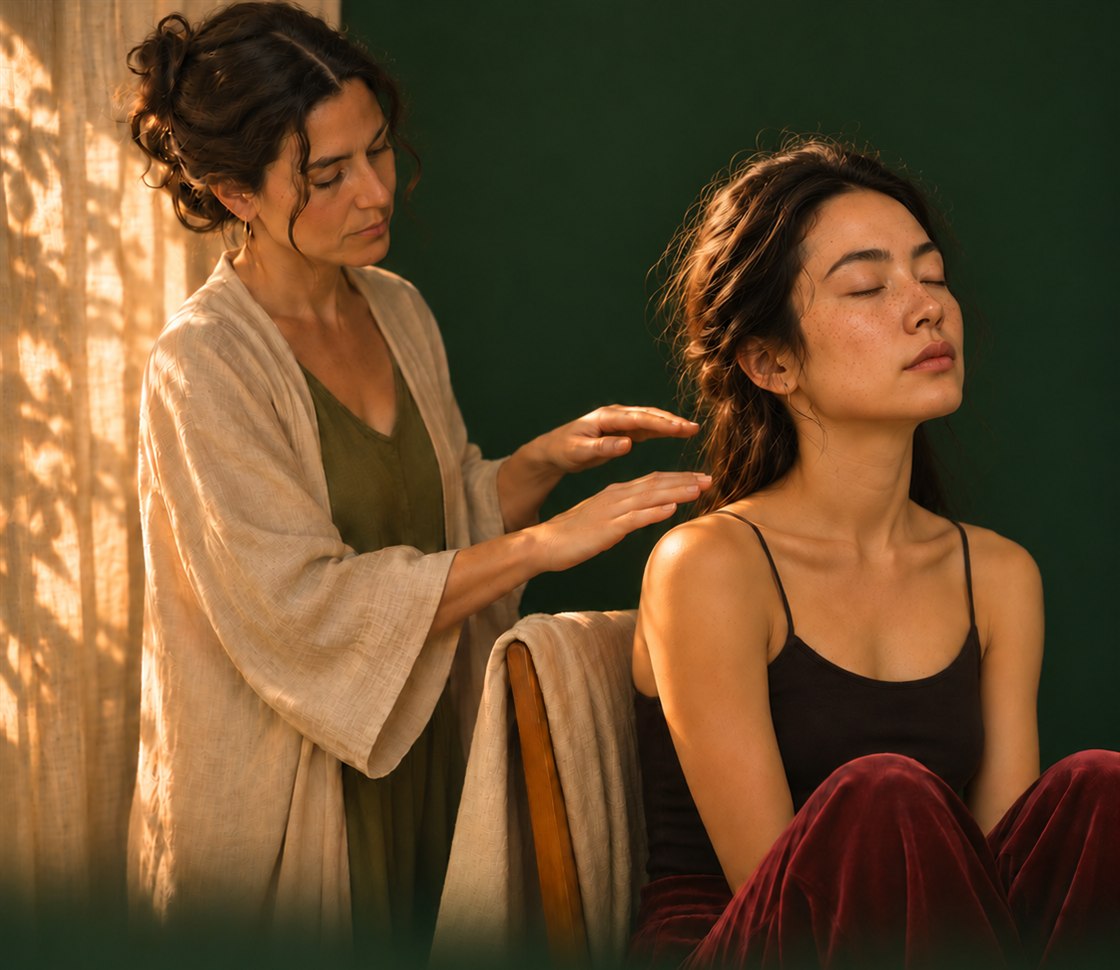
The Usui Reiki tradition took shape in Japan through Mikao Usui’s teachings in the early 1920s. During a session, the practitioner may place their hands lightly on the body or hold them just above it. The session gives the recipient time to be still, with another person attending quietly to their comfort. The symbols associated with Reiki have a place within its teaching traditions.
Receiving care can be unfamiliar when daily life usually asks us to keep doing. A comfortable seat, a quieter room and an agreed approach to touch can help make the experience approachable. There is room to ask how the session will proceed and to say what feels comfortable. At Inner Season, we value this kind of attentive encounter as part of caring for the whole person.
Medical qigong and pain care
Medical qigong is a term used for health-focused forms of qigong. One US pilot at the University of Kansas Medical Center studied a ten-week programme for fibromyalgia. Twenty participants completed it. Average pain scores fell from 5.9 to 3.1 in the qigong group and from 7.0 to 6.8 with simulated qigong. The qigong group also showed greater improvements in sleep and anxiety scores.
This was a small pilot with no later follow-up. It offers an encouraging reason to investigate structured practice further. The programme involved participants practising movement, breathing and meditation themselves. Its findings concern that particular programme and group of people.
Reiki and knee arthritis symptoms

A US randomised trial published in Complementary Therapies in Medicine in 2025 assigned 164 adults with knee osteoarthritis to Reiki, simulated Reiki, mindfulness or a waitlist. The active treatments consisted of four weekly sessions of thirty minutes. At two months, the Reiki and mindfulness groups had greater improvement in knee symptoms than the waitlist group.
The published abstract reports that 55 per cent of participants in the Reiki and mindfulness groups achieved a symptom reduction greater than 30 per cent, compared with 20 per cent in simulated Reiki and 13 per cent on the waitlist. The statistically established Reiki comparison was with waiting for treatment. These results support further study of Reiki as a complementary approach to symptom care.
A moment of comfort during treatment
At two US outpatient infusion centres, researchers asked patients to rate symptoms before and immediately after a fifteen-to-twenty-minute Reiki session. Patients reported improvements in pain, anxiety, fatigue and nausea. The evaluation gives a picture of how people felt within the treatment setting.
Because everyone received Reiki and there was no comparison group, the evaluation cannot establish which part of the encounter produced the changes. Its value lies in recording patients’ experience of comfort during care. For someone having a difficult treatment day, that immediate experience deserves attention.
Understanding the language of flow
Chinese medicine uses qi stagnation to describe a pattern in which qi is understood to move less freely. Within that tradition, terms such as flow and stagnation help practitioners interpret a person’s experience. Qigong brings movement, breath and attention together in a practice traditionally intended to cultivate the movement of qi.
Clinical studies can record changes in pain, anxiety, sleep and everyday function. Demonstrating those changes and explaining them through a proposed energy mechanism are separate research questions. An energy blockage being cleared has yet to be established by these trials. The traditional language can still be explored thoughtfully, with its meaning made clear.
Bringing the practice into daily life
A practice becomes part of life through ordinary decisions. You find a time that is possible to return to. You choose a teacher who welcomes questions and can help adapt movement to your comfort. You notice what you feel before and after, including the mornings when very little changes. In a Reiki session, you can let the practitioner know whether you prefer light touch or hands held above you.
Our commitment at Inner Season is to attentive, whole-person care. We make room for these traditions because movement, breath and receiving care can matter deeply in the course of a day. When using a practice to support an ongoing health condition, include it in the conversation with your healthcare team so it fits alongside your treatment.
For today, a beginning might be simple. Sit comfortably. Let your hands rest. Feel your feet or the support beneath you, and allow a few easy breaths without forcing them. Then notice what you need next, perhaps a stretch, a drink of water, company or rest. There is time to learn your own rhythm.
萬物皆是能量
我們察覺到的生命力
生命力的變化,往往藏在很平常的事情裡。好好睡了一晚,早上頭腦清醒一點。散步時,肩膀慢慢放鬆。熟悉的音樂,讓辛苦的午後多了一點暖意。當我們說今天的「能量」不同了,可能同時在形容精神、疲倦,以及重新感到自己活在當下的感受。
「萬物皆是能量」邀請我們從呼吸、動作與專注的照顧,探索這些經驗。不同傳統有各自談論生命力的語言。認識它們,可以從理解字詞的意義開始,也可以給自己一點時間,感受練習帶來甚麼變化。
道家三寶,精、氣、神
道家修習把精、氣、神稱為「三寶」。精常譯作生命的精華,氣是維繫生命的氣息,神則與精神和覺知相連。它們的意義,隨著不同傳承與修習而有所發展。放在一起,三寶提供了一個理解人的角度,讓身體、呼吸和覺察彼此相連。
氣功把這種關係帶進實際練習。姿勢、動作、呼吸與專注,在一套可重複的過程中慢慢熟悉起來。安靜的課堂裡,動作看來可能很簡單。手臂提起,膝蓋微鬆,身體找到一個能舒服停留的位置。熟悉之後,就有空間察覺更細微的差別,哪個動作自在,哪個動作需要少做一點。
生命之息、脈輪與微細身
在印度瑜伽中,普拉納常譯為維繫生命的氣息。部分瑜伽與密續傳統透過氣脈和稱為脈輪的中心,描述微細身。昆達里尼在某些教導中被描寫為盤繞的靈性力量,其覺醒屬於更完整的修習道路。不同傳統有不同圖像,今天常見的七輪圖,是其中一種呈現方式。
初次接觸時,可以把這些圖像放回它們的歷史與靈性教導中理解。圖上的一個色點,也許成為專注或反思的焦點。多認識練習的背景,圖像就更有意義,同時也讓呼吸和姿勢的體會,按自己的步伐慢慢展開。
靈氣,與接受照顧的經驗
臼井靈氣在二十世紀二十年代初,隨臼井甕男於日本的傳授而發展。進行靈氣時,施作者可把雙手輕放在身體上,或懸於身體上方。接受者可以安靜停留,由另一個人專注地留意自己的舒適。靈氣符號也在相關的教學傳統中有其位置。
當日常總是催促我們繼續做事,接受照顧反而可能有點陌生。舒服的位置、安靜的房間,以及事前談好的接觸方式,都能讓人更容易進入這段體驗。你可以問問過程如何進行,也可以說明甚麼讓自己舒服。在 Inner Season,我們珍惜這種專注的相遇,把它放在照顧整個人的實踐裡。
醫療氣功與疼痛照顧
「醫療氣功」常用來指以健康為目的的氣功形式。美國堪薩斯大學醫學中心一項先導試驗,探討為期十週的練習對纖維肌痛症的影響,共有 20 人完成。氣功組的平均疼痛評分由 5.9 降至 3.1,模擬氣功組由 7.0 降至 6.8。氣功組的睡眠和焦慮評分,亦有較大的改善。
這是一項規模較小、沒有後續追蹤的先導研究。結果鼓勵研究者進一步探討有系統的練習。參加者親自練習動作、呼吸和靜心,研究所觀察到的變化,來自這一套課程和這一組人。
靈氣與膝關節炎症狀
2025 年刊於 Complementary Therapies in Medicine 的美國隨機試驗,把 164 名膝關節骨關節炎患者分為靈氣、模擬靈氣、正念和等候組。接受介入的組別每週進行一次三十分鐘體驗,共四次。兩個月時,靈氣和正念組的膝部症狀改善幅度,均較等候組大。
論文摘要報告,靈氣和正念組有百分之五十五的參加者,症狀減輕超過三成。模擬靈氣組為百分之二十,等候組為百分之十三。靈氣達統計顯著的比較,是與等候組之間的差別。這些結果支持進一步研究靈氣在症狀照顧中的輔助角色。
治療期間,一刻舒緩的感受
在美國兩間門診輸注治療中心,研究者邀請患者在十五至二十分鐘靈氣體驗之前和之後,即時評估自己的症狀。患者報告疼痛、焦慮、疲倦和噁心有所改善。這項評估讓我們看見,治療環境裡的人當時有甚麼感受。
由於每位參加者都接受靈氣,研究沒有對照組,因此無法確定體驗中的哪一部分帶來變化。它的價值,是記錄患者在接受治療時感到舒緩的經驗。對正在度過辛苦治療日子的人而言,這一刻的感受值得被看見。
理解「流動」的語言
中醫以「氣滯」描述氣的運行不暢。在這套傳統裡,流動與鬱滯等字詞,協助施治者理解一個人的感受。氣功把動作、呼吸與專注結合起來,傳統修習以調養氣的運行為目標。
臨床研究可以記錄疼痛、焦慮、睡眠與日常活動功能的變化。觀察到變化,以及用某種能量機制解釋變化,是兩個需要研究的問題。這些試驗尚未證實「能量阻塞」已被解除。把字詞的意思說清楚,也讓我們可以更細心地理解傳統語言。
把練習帶回日常
練習進入生活,往往靠一些平常的選擇。找一個能夠再次回來的時間。選一位歡迎提問、能按你的舒適調整動作的老師。留意練習前後的感受,也容許有些早上沒有甚麼明顯變化。接受靈氣時,可以告訴施作者,你喜歡輕柔接觸,還是雙手懸於身體上方。
Inner Season 重視專注而完整的照顧。我們為這些傳統留出空間,因為活動、呼吸與接受照顧,都可以在一天裡有很深的意義。如果希望以練習支持正在接受治療的健康狀況,可以與醫療團隊一起討論,讓它妥善融入現有照顧。
今天的開始,可以很簡單。舒服地坐好,讓雙手休息,感受雙腳或身下的支撐,自然地呼吸幾次。然後問問自己,接下來需要甚麼,也許是伸展、喝水、有人陪伴,或好好休息。慢慢來,有時間認識自己的節奏。
Warmest,
Latitia x