Seasonal Living
Autumn care through touch
Three gentle gestures from Chinese seasonal care, and what they can teach us about paying attention as the air cools.
Latitia Kung ·
English
The first signs of a changing season are often small. A cold door handle in the morning. The heating coming on before supper. A dry mouth after an afternoon spent talking. We can be well into autumn before we notice how many adjustments we have already made. The extra layer goes in the bag almost without thought. Our habits follow the weather a little more slowly.
Traditional Chinese medicine associates autumn with dryness. Within that tradition, seasonal care pays attention to fluids and to the lungs. The language belongs to a particular way of understanding the body and the seasons. It invites a practical question even in a very different setting. What has changed around me, and what do I notice in response?
A smaller gesture
Self-massage can begin with less ceremony than the word suggests. You can sit where you already are, set down whatever is in your hands and let your shoulders settle. Feel the warmth of one palm against the other. There is time to notice the temperature of your skin and the difference between touching and pressing.
The three gestures that follow come from the original autumn practice. Choose the one that feels comfortable and leave room to stop. They fit easily into a moment you already have, perhaps while the kettle boils or after you wash your hands in the evening.
Beneath the lower lip
Chengjiang (承漿, CV24) is the name given to the small groove in the centre below the lower lip. In traditional practice, this point is associated with saliva and mouth comfort. Notice what your jaw does when your hand comes away.
The location is small enough that a light fingertip is plenty. The five repetitions are simply a starting point. A single moment of contact can tell you as much about the way you are holding your jaw as a longer routine.
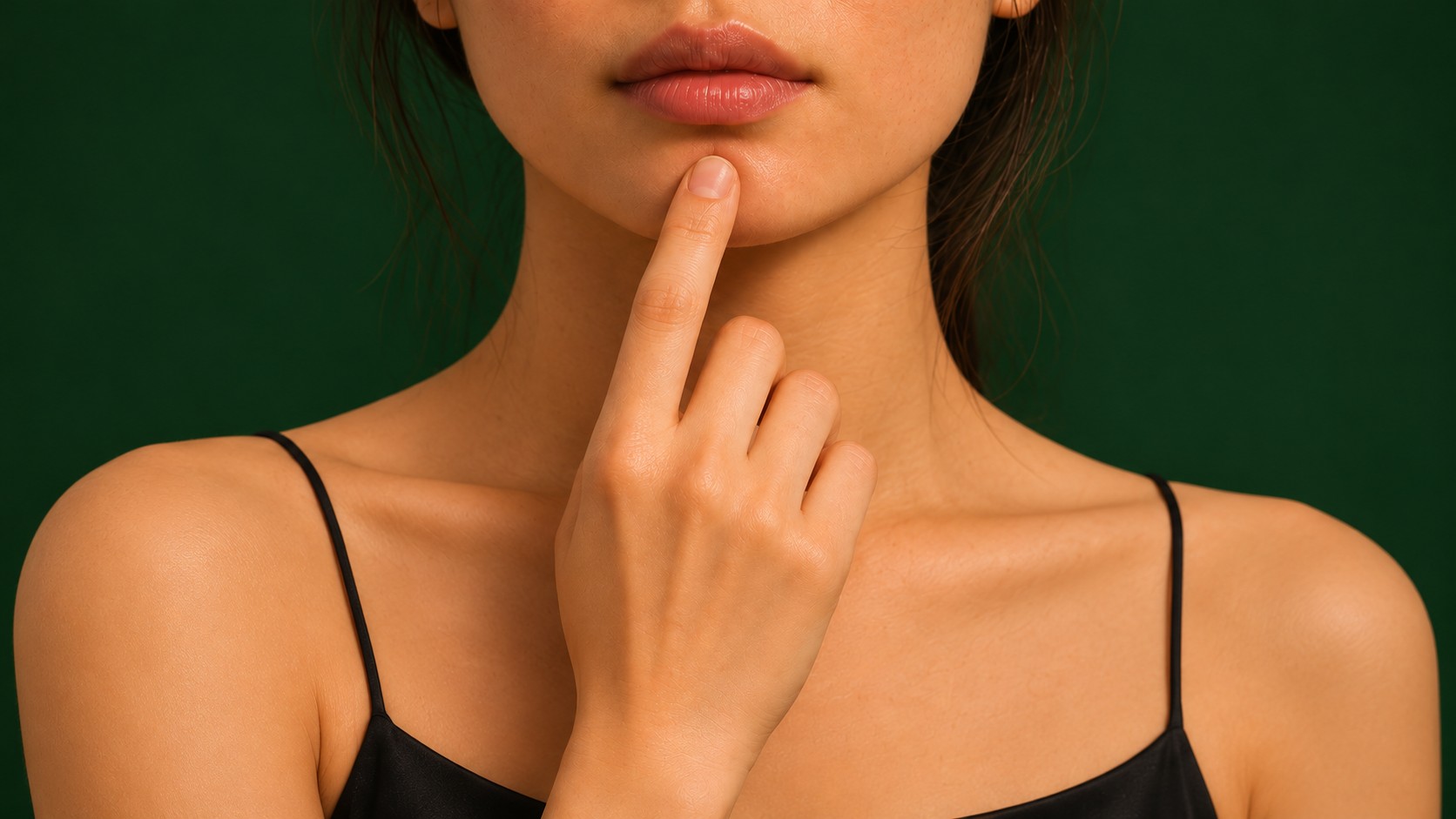
- Find the small dip between the lower lip and the rounded part of the chin.
- Rest the pad of one finger in the centre of the dip.
- Press lightly, then lift the finger. Begin with up to five slow repetitions.
Let your jaw rest between touches. A light contact is enough.
Beside the nose
The next gesture is at the outer edges of the nostrils. In the traditional seasonal framework, the nose is linked with the lungs, and this kind of touch is used for nasal comfort. Wash your hands first and notice how light you can make the circles.
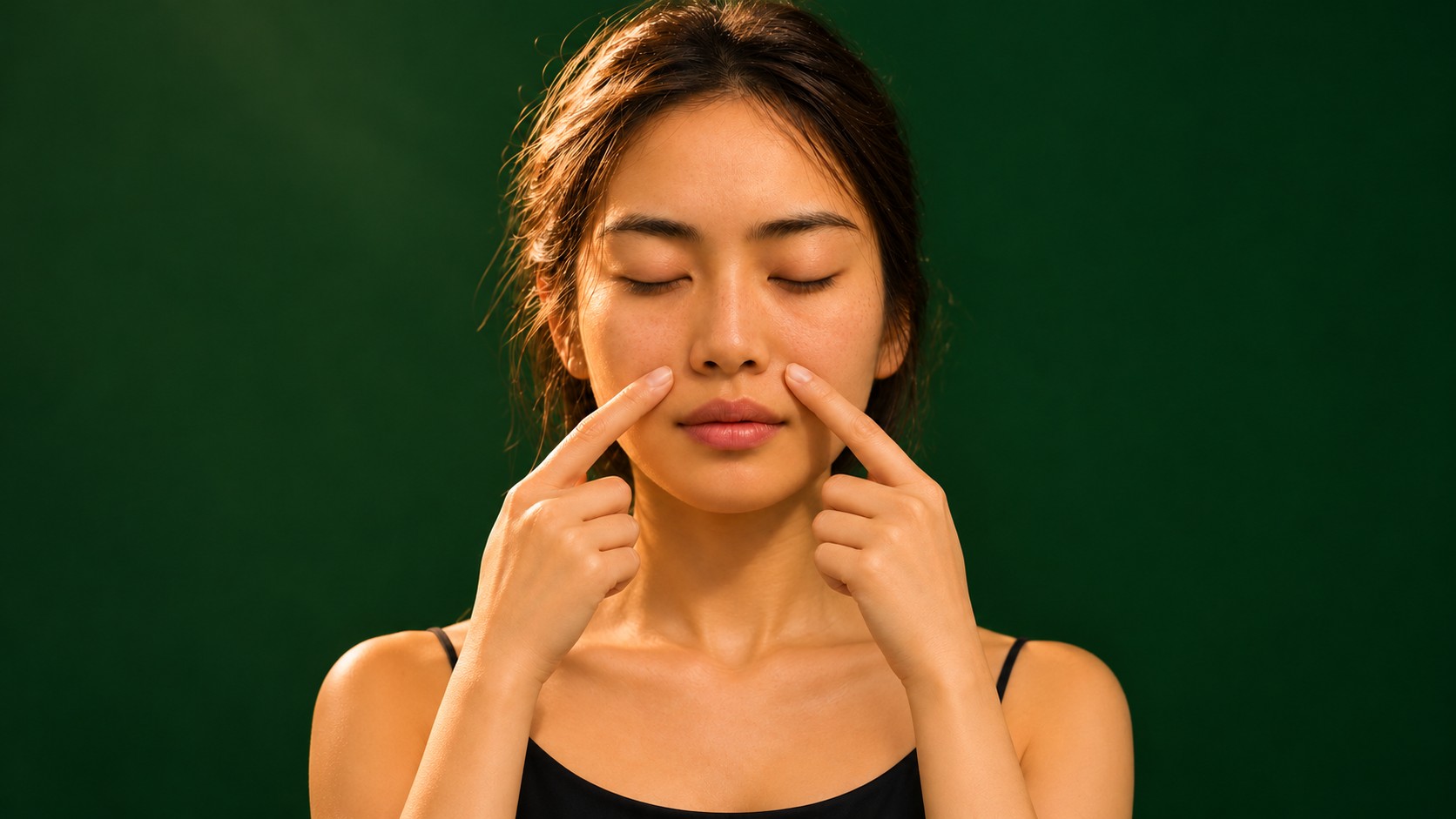
- Use the soft pads of your index fingers.
- Place a fingertip on the skin just outside each nostril.
- Make up to five tiny circles on each side while breathing normally.
Leave the nostrils clear and skip the gesture if the skin is sore.
Warm palms over clothing
The third gesture brings both hands lower. It draws on a tradition of abdominal massage for bowel comfort. Clinical guidance uses specific techniques for constipation and lists situations where massage is unsuitable.
The hospital guidance below covers when to avoid abdominal massage or ask a clinician first.

- Rub your palms together, then rest them over your clothing.
- If comfortable, make up to five small clockwise circles around the navel.
- Keep your touch light. Stop if anything hurts.
Skip this practice during pregnancy, after recent abdominal surgery or with unexplained abdominal pain.
Something you can return to
The value of a small ritual is that it can fit an ordinary day. You can put the phone down, let your hands rest and notice how much effort you are using. You might feel warmth immediately or simply become aware of how cold your fingertips are. Either observation is a place to begin. As autumn gives way to winter, paying attention in these modest ways can help us choose what would feel supportive next.
繁體中文
季節變化常從小事開始。清晨的門把變涼,暖氣在晚飯前便開了,或說了一下午話後,才發現嘴巴有點乾。衣服已經多穿了一層,其他日常習慣卻慢一點才跟上天氣。
中醫有秋與燥相應的說法,傳統秋季養生會留意津液與肺。這個觀點也帶出一個日常問題。周圍有甚麼變了?我的身體又有甚麼感覺?
從小動作開始
坐在原處,放下手上的東西,讓肩膀放鬆。先感受一隻手掌貼著另一隻手掌的溫度,再留意輕觸與用力按壓的分別。可以在等水煮開或晚間洗手後,選一個感覺舒服的動作。
下唇正下方
承漿穴在下唇下方中央的小凹位。傳統上,這個穴位與津液及口部的舒適感有關。輕輕觸碰已足夠。手指放開後,留意下顎有沒有放鬆。
- 找到下唇與下巴之間的小凹位。
- 把一隻手指的指腹放在凹位中央。
- 輕按再放開,先慢慢試最多五次。
每次放開時讓下顎休息,輕輕觸碰已足夠。
鼻翼旁邊
下一個動作在鼻翼外緣。傳統養生把鼻與肺聯繫起來,也會以輕觸照顧鼻部的舒適感。先洗手,然後試試把圈畫得很小、很輕。
- 用食指柔軟的指腹。
- 把指腹放在兩側鼻翼外的皮膚上。
- 自然呼吸,每側輕輕畫圈最多五次。
保持鼻孔暢通。皮膚疼痛時略過這一步。
隔著衣服暖一暖腹部
第三個動作把雙手放低一些。腹部按摩也出現在便秘護理的指引裡,當中會說明適用的手法和應避免按摩的情況。可先參閱文末的醫院指引,了解甚麼時候需要先詢問醫療專業人員。
- 搓暖雙掌,再隔著衣服放在腹部。
- 感覺舒適的話,繞著肚臍順時針畫小圈,最多五次。
- 保持輕柔,感到疼痛便停止。
懷孕、近期接受腹部手術,或有原因不明的腹痛時,請略過。
把小習慣留在日常
把手機放下,讓雙手休息一下。你也許馬上感到暖,也許才發現指尖比想像中冷。兩種感覺都值得留意。秋天走向冬天時,這些細微的感受可以幫你想清楚下一步需要甚麼。
Further reading · Cambridge University Hospitals guidance on abdominal massage
Warmest,
Latitia x